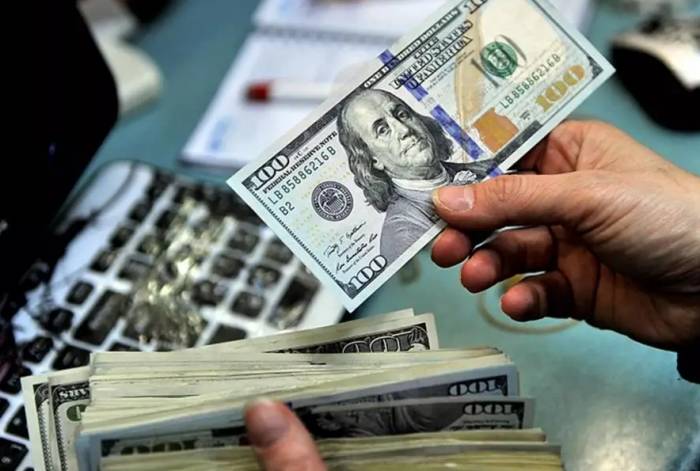
Since the beginning of 2022, the US dollar has embarked on a gradual path of interest rate hikes, with the process gradually coming to an end in 2023. This has not only had a profound impact on the global financial markets but is also more directly reflected in the economic data of various countries.
Japan was bizarrely surpassed by Germany, and Europe was mercilessly harvested by the United States. It is worth mentioning that there is a mysterious "dark horse" country that has shown astonishing resilience in this rapidly changing environment.
According to statistics, the country's annual economic growth rate between 2022 and 2023 actually reached over 7%, which is quite surprising.
However, only when we delve deeper into the economic policies and market dynamics of other countries can we accurately infer who this "dark horse" is and why it has been able to achieve rapid development so quickly?
Affected by the interest rate hikes of the US dollar, many European and American countries are under tremendous pressure in terms of finance and trade. The economic growth rate of the Eurozone has been declining year by year, especially in countries like the Netherlands and Greece, where the economic situation is even more severe.
In contrast, the United States, due to the strong strength of its financial system and the status of the US dollar as an international reserve currency, has been able to fully enjoy the benefits of global liquidity shocks.
However, this situation is not fair, and for other countries, their economic development faces more serious challenges.
In the Asian region, Japan, once a world-class economic powerhouse, is now experiencing a continuous decline in its gross domestic product due to the significant devaluation of the yen.
In addition, the economic development gap between China and the United States has widened. Although this is mainly due to the structural differences between the two countries, the liquidity shocks brought about by frequent interest rate hikes of the US dollar have indeed played a key role in this process.Europe's economic growth was once hailed as the "coachman" of the global economy, yet in recent years, its growth momentum has been gradually weakening.
Signs emerged at the beginning of the third quarter of 2022 that one of the region's most influential countries, Germany, has shown negative growth.
According to official data, Germany's Gross Domestic Product (GDP) decreased by as much as 0.8% year-on-year in this quarter, and before that, Germany's overall GDP also declined during the first three quarters of this year, with a year-on-year drop of 0.4%.
The International Monetary Fund (IMF) predicts that Germany's GDP for the whole year is expected to experience a larger negative growth, with a gloomy figure of -0.5%, revealing the severe current situation of the European economy.
This situation makes people deeply realize that the European economy has entered a bottleneck period.
Moreover, there are phenomena such as the GDP growth rates of developed countries such as the United Kingdom and France in the first three quarters only reaching 0.5% and 0.7% respectively.
This means a clear degradation of European economic strength, and at the same time, it highlights the difficulties faced by the entire Europe.
In contrast, other markets outside the European and American regions have performed stronger than before, including emerging economies such as China, India, Brazil, and Russia. These countries have risen rapidly like summer flowers, not only making outstanding contributions to the global economy but also providing great help in solving the current European economic predicament.
So, what exactly has caused the decline of the European economy?
The main reasons are the instability of the external environment and internal structural problems.Firstly, since last year and particularly since the beginning of 2022, due to the escalation of geopolitical tensions, especially the outbreak of the Ukraine crisis, coupled with the continuous and significant increase in interest rates by the Federal Reserve, leading to a flight of dollars, Europe has faced severe external pressures.
Secondly, the sharp rise in international oil prices, along with U.S. sanctions on Russia, has resulted in Europe being unable to purchase cheap Russian energy, further exacerbating the internal inflationary pressures within Europe.
Faced with these challenges and the structural economic issues that are prevalent within the EU, there is an expectation for Europe to find solutions as quickly as possible.
Lastly, in an effort to contain China, the U.S. has adopted decoupling measures, which have led to certain obstacles in Europe's cooperation with China. As the world's second-largest economy, China's influence is significant. Europe's lack of an independent foreign policy and its constant compromise towards the U.S. has resulted in it being exploited by the U.S.
Overall, Europe's economic situation is far from as optimistic as we might imagine. Although Europe once held a prestigious position as the "coachman," it now appears to be faltering. Over time, the negative effects of these issues will inevitably become more pronounced.
In addition, aside from China, the Asian economies that are noteworthy are Japan and India. How have these two countries fared in 2023?
In the first half of the year, the Gross Domestic Product (GDP) increased by 1.7% compared to the same period last year. This figure not only surpassed that of Germany, another economic powerhouse in Europe, but also indicated signs of recovery in Japan's economy.
However, it is worth noting that despite Japan's robust economic performance, its inflation rate remains lower than that of Germany.
Furthermore, influenced by the current increase in U.S. dollar interest rates, the Japanese yen has also experienced a significant depreciation, causing Japan's GDP, when measured in U.S. dollars, to show a clear downward trend.
Over the past three fiscal years, Japan's GDP has fallen to $3.12 trillion, no longer holding the rank of the top three in the world, but instead being downgraded to fourth place.It is worth our deep contemplation that GDP, as an indicator of a country's economic strength, may sometimes fail to accurately reflect the actual situation. For example, despite the German economy's continuous negative growth in the past few quarters, its GDP still exceeds that of Japan, which is renowned for its manufacturing industry. In reality, the Japanese economy is not as stable as it appears, with its GDP in the third fiscal year declining by 0.5% compared to the same period last year. Faced with such a situation, the challenges Japan has to deal with are far more than just currency devaluation; more importantly, it is about how to enhance the competitiveness of its own industries. Especially against the backdrop of the development of the new energy vehicle market dominated by countries such as China, the United States, and Europe, Japan's automotive industry has already lost most of its competitive advantages. Who is the big dark horse? I'm afraid everyone will be disappointed to hear that it is India. India's GDP currently ranks fifth in the world, with such a large volume and such a high growth rate, which is indeed very similar to what China used to be. India's GDP growth rate in the first three quarters of 2023 reached an astonishing 7.1%, ranking first among the top ten countries in global GDP and leading the global economic growth trend. As an emerging power in the Asian region, India's vast land resources and huge population base have created endless business opportunities and infinite possibilities. In recent years, with the Indian government gradually expanding its opening-up policies to attract domestic and foreign investment, India's economy has developed rapidly.These outstanding economic figures are attributed to a series of proactive economic reform measures taken by the Indian government, as well as the joint efforts of private enterprises.
In addition, India is also expected to surpass Germany and Japan in the next few years or even a decade to become the world's third-largest economy.
Although it is still a long way from the world's largest economy, the United States, the narrowing gap with Japan and Germany indicates that India's economic strength is gradually rising.
Goldman Sachs predicts that by 2030, India's GDP is expected to grow to $6.38 trillion, ranking third in the world after the United States and China.
Finally, let's take a look at the data between China and the United States. The data shows that although our country's economic growth rate is much higher than that of the United States, due to inflation, the United States' nominal GDP is higher than ours, and our country is now one of the few countries in the world that does not have inflation.
The inflation levels of Japan, Germany, and India we mentioned earlier are all very high. For example, India's current inflation rate has reached 5.5%, and it is expected to continue to rise in 2024.
So, despite rapid growth, people's lives are also difficult under the backdrop of a global economic downturn, so the so-called GDP can no longer reflect the true state of the economies of various countries.
If the United States starts to lower interest rates in the middle of 2024, the current situation will change in the opposite direction, which tells us that we do not need to be obsessed with GDP data, but to better develop the domestic economy and improve the standard of living for the people.





Add Your Comment