In the past one or two years, India has not been spared from the praise of the United States. What everyone sees is the relocation of manufacturing to India and the soaring Indian stock market. However, the logic hidden behind this is likely to be understood by very few people.
The United States originally hoped to harvest China through this interest rate hike to continue maintaining its hegemony. However, it did not expect that our country was well-prepared. Seeing that China could not be harvested and the European Union was not enough to harvest, India naturally became the target of the United States. Currently, nearly 3 trillion rupees have been withdrawn from India, and India's inflation has reached a historical high of 5.6%. So, how has India, which has not yet grown up, been harvested by the United States?
We must understand a very simple truth, that is, the so-called allies of the United States, as long as the United States needs it or it threatens the interests of the United States, being harvested and suppressed is inevitable. China is, of course, no exception.
For example, around the 1990s, when Japan's economic total volume surpassed that of the United States, it was suppressed by the West led by the United States with a "Plaza Agreement" to hell.
The Japanese economy entered the lost 30 years. For Japan's semiconductor companies, the United States also fiercely attacked and supported the small country of South Korea to rise, causing Japan to lose its position as the world's largest semiconductor producer and completely become a vassal of the United States.
After that, it defeated the Bank of England, the Southeast Asian economic crisis harvested Thailand, and now it is harvesting the European Union, South America, Asia, and many other emerging countries. As long as you use the US dollar and American capital, you cannot escape the fate of being harvested.
Therefore, since China has been on guard early, it cannot be harvested, and it must be replaced by someone. Unless the United States has completely transferred its debt to other countries, the pit dug by the United States is too large now, so India has become the new leek.
So, why can the United States still not get rid of the high inflation crisis after multiple rounds of harvesting?
This is because over the past year, the United States has tried to reduce US inflation through interest rate hikes and balance sheet reduction, and the results are indeed there. However, the most important thing is still to control and suppress oil prices to control inflation.Currently, inflation in the United States remains at a high level compared to the past few decades, with a significant gap from the normal level of within 2%.
But what has happened now?
That is the Houthi armed forces attacking Israeli ships in the Red Sea. It is important for everyone to know that the Red Sea is a strategic location, which has directly led to a rebound in global oil prices, thereby driving and stimulating the continued rebound of inflation in the United States.
In fact, during the downward trend of inflation in the United States in November and December, the decline in crude oil prices accounted for almost more than 50% of the proportion. However, we see that the crude oil inventory of the EIA (U.S. Energy Information Administration) has not increased significantly.
Instead, the decline has far exceeded expectations.
This only reflects one issue:
That is, the price of oil has been forcibly controlled and suppressed. Therefore, the so-called decline in inflation in the United States is actually self-deception. If we exclude crude oil, then the inflation in the United States should be at least 0.5 percentage points higher than the 3.7% in October, so that the inflation in the United States is still maintained at more than 4%.
Therefore, if the inflation in the United States rebounds on the surface, it means that the previous interest rate hikes in the United States have completely failed, which will be a fatal blow to the already nervous U.S. bond and capital markets.
Due to the further increase in inflation and the potential pressure on the U.S. dollar exchange rate caused by trade issues, the Federal Reserve may have to take action to raise short-term interest rates.
The Federal Reserve may need to adjust its internal interest rates again to prevent the rebound of inflation caused by the recent decline in long-term bond yields and the blockage of shipping channels in the Red Sea area.This indicates the severe situation of the current U.S. financial market.
As the domestic inflation situation in the United States becomes increasingly tight, and changes in the international trade pattern exacerbate the impact on the U.S. dollar exchange rate, the U.S. capital market is under unprecedented pressure.
It is particularly worth noting that if conflicts between the United States and major oil-producing countries intensify, such as Iran, Saudi Arabia, etc., or if there is any form of fluctuation in the U.S. oil supply, it could trigger an increase in energy prices, thereby causing inflation to continue to rise.
The emergence of the Houthi militia now, its impact on the U.S. economy, especially oil prices, may exceed the Israel-Palestine conflict.
Furthermore, if the budget agreement cannot be reached smoothly, it will also cause the government to suspend work, further impacting market confidence and intensifying inflation risks.
Under such circumstances, various financial institutions are starting to assess and price the risks of various economic events that may occur in the future.
They recognize the uncertainty of the inflation outlook and foresee the possibility of increased risks in various U.S. financial markets.
Therefore, it is particularly evident in recent market buying and selling behaviors, with investors even starting to subscribe to funds to ensure the holding of high-quality assets.
At the same time, they also start to treat bond market investments more cautiously, paying particular attention to segments with poor liquidity.So, what does all this have to do with India?
As is well known, ever since Trump initiated a trade war against our country, India, a country with border disputes with us, has become an object of American courtship, making it a pawn in the game of confronting and irritating China.
Because they need to use each other, India naturally accepted a series of so-called investments and aid from the United States, such as large-scale investment by American capital in India, and American companies like Apple moving to India.
But as I said earlier, as long as you use the US dollar, you cannot escape the shearing, which is the essence of the US dollar, and the inevitable attribute of the United States as the global financial center.
The continuous rise in global crude oil prices will inevitably have a serious impact on India, a country with a large population and consumption.
Once the situation in the Middle East intensifies, or those important oil-producing countries are involved in conflicts, oil prices may rise further. It is expected that in the next few months, the high shipping freight and insurance costs will lead to a significant increase in the prices of Indian goods.
According to data released by the Indian National Statistical Office, the prices of necessities such as onions and tomatoes in December last year increased significantly compared to the same period of the previous year, with increases of an astonishing 98% and 32%, respectively.
In addition, the soaring food prices since 2023 have provided a strong driving force for the rise in India's inflation rate, with the overall inflation in India rising from 4.87% in October last year to 5.55% in November.
It should be pointed out that, according to the global macro model of Trading Economics and the predictions of experts, until the second quarter of next year, India's inflation rate may reach 6.9%, setting a new high in nearly 15 months.
The fluctuations in food prices will undoubtedly plunge the lives of ordinary people in India into dire straits. In fact, the recent surge in the Indian stock market is also closely related to inflation.For the manufacturing industry, which is crucial to the national economic lifeline, from a global perspective, the persistent high inflation in European and American countries not only affects domestic production activities in Indian agriculture and manufacturing but also drives an inflation pattern dominated by food and energy.
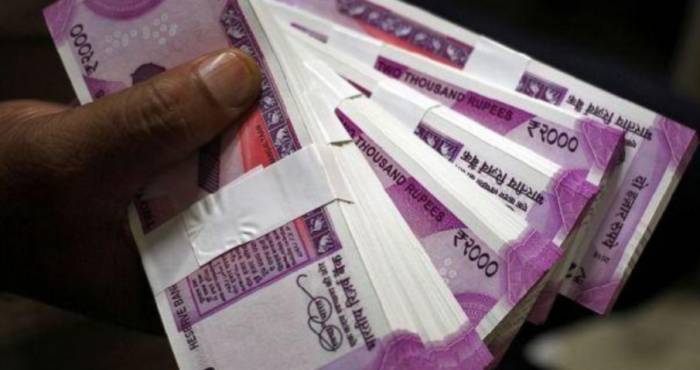
Under such circumstances, the withdrawal of foreign capital from India becomes inevitable. Let's look at a set of data: On January 3, the Indian Securities Depository announced data focusing on the withdrawal of financial assets by international investment institutions from India. From the beginning of last year to the beginning of this year, international institutional investors have withdrawn nearly 3 trillion rupees of financial resources from the Indian market, equivalent to three times the net outflow during the 2008 global financial crisis and even breaking the record for the largest annual withdrawal in the past two decades.
This large-scale withdrawal of funds may put short-term economic pressure on India and lead to a decline in demand, which in turn affects the stability of domestic asset prices and the balance of international payments.
Moreover, the depreciation of the Indian rupee is also very evident. Since 2023, the exchange rate of the Indian rupee against the US dollar has depreciated by 11.9%, and if calculated from 2018, this depreciation has reached an astonishing 32%. If we also consider the high inflation rate of 6%, the wealth created by hardworking Indians will effortlessly flow to the United States.
It is worth noting that against the backdrop of the continuous expansion of external debt, India is gradually becoming one of the most fiscally vulnerable countries among emerging markets in the eyes of major international institutions. According to the latest reports from India, the manufacturing industry in India is currently facing serious problems, and the unemployment rate has reached double digits, at a high level in recent years. It is not an exaggeration to say that if the United States continues to raise interest rates, India is very likely to follow in the footsteps of Sri Lanka.Not only that, but India's government debt has also reached 78% of its GDP, hitting a high point in nearly six years. If the US dollar's interest rate cut cycle is delayed and the dollar's interest rates remain high, India's economy could very well be pulled apart like Argentina's. India could also trigger economic issues due to debt problems, causing the Indian economy to regress by several years.
Therefore, from this perspective, the US dollar, as an international currency, is the main culprit in plunging the global economy into difficulty. For its own development, the United States cannot possibly consider the life and death of other countries.
A once-and-for-all solution to this problem would be to return to a global monetary system based on the gold and silver standard, where everyone eats as much as their bowl can hold. Do you think this is the case?




Add Your Comment